Mastering the Back: What Every BJJ Student Should Study
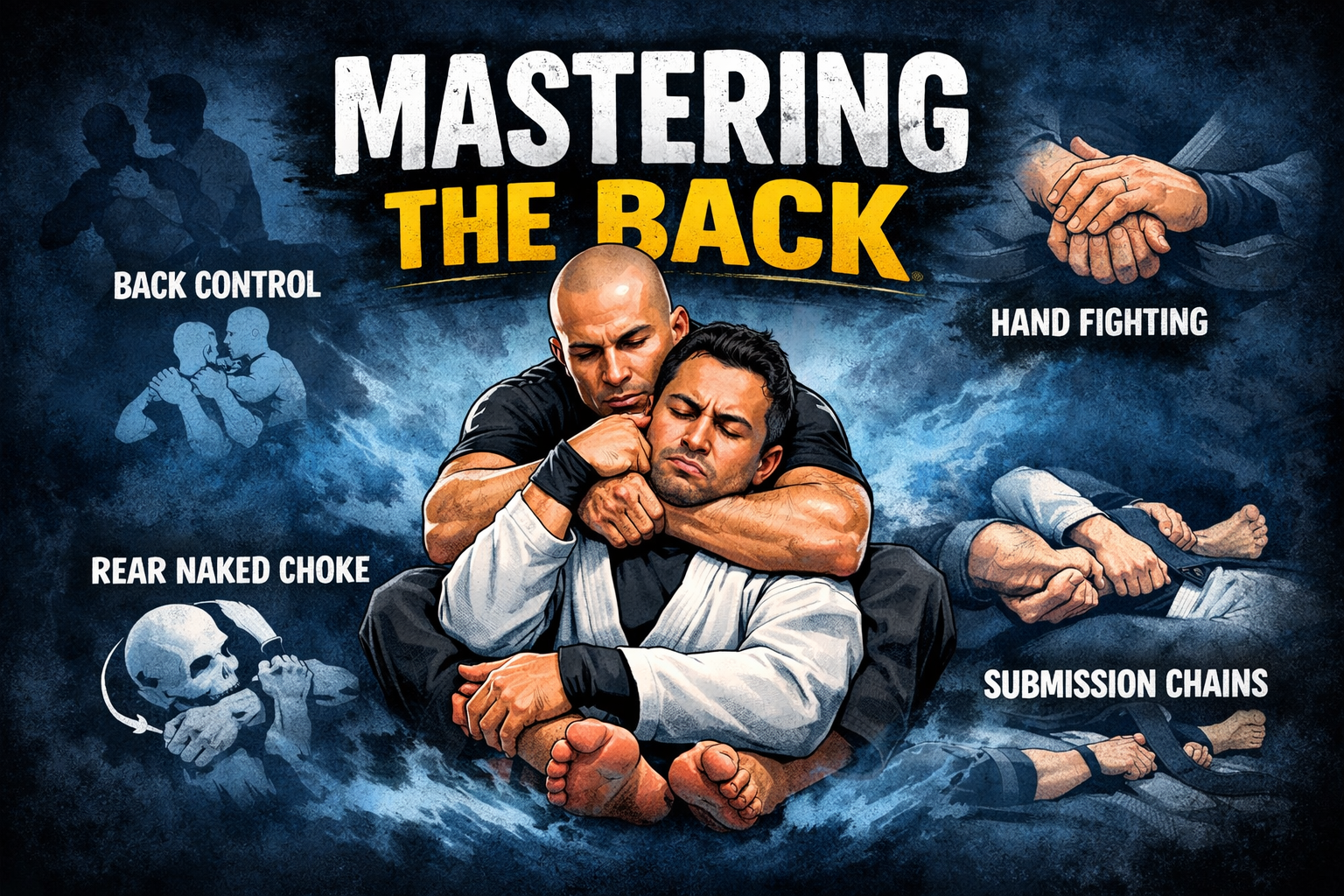
In Brazilian Jiu-Jitsu, the back is widely considered the most dominant position in grappling. From here you can control your opponent, neutralize their attacks, and apply some of the highest-percentage submissions in the sport. Even legends like Marcelo Garcia and John Danaher have built entire systems around back control because of its reliability.
But truly mastering the back requires more than just learning how to apply a rear naked choke. It involves understanding control, transitions, submission chains, and defensive counters. If you want to develop a dangerous back attack game, here’s what you should be studying.
1. Back Control Fundamentals
Before submissions, you must first learn how to hold the position.
Your opponent’s first priority when you take the back is to escape. If you can’t maintain control, your submissions won’t matter.
Key elements to study include:
- Seatbelt grip (over-under control of the shoulders)
- Hip-to-hip connection
- Chest-to-back pressure
- Head positioning
- Keeping your opponent’s shoulders pinned
Understanding how to stay glued to your opponent’s back while they move, bridge, and rotate is the foundation of the entire system.
A great concept to focus on is maintaining upper body control while adjusting your hooks or leg positioning.
2. Hooks vs. Body Triangle
Two major control systems dominate modern back attacks:
Hooks
Traditional hooks allow mobility and transitions. They make it easier to follow your opponent as they turn and move.
Focus on learning:
- Sticky hooks
- Hook retention during escapes
- Switching hooks during movement
Body Triangle
A body triangle creates immense pressure and limits your opponent’s ability to escape.
Things to study:
- Proper locking mechanics
- Switching sides when necessary
- Maintaining choking arm positioning while applying pressure
Both systems are valuable, and high-level competitors often alternate between them.
3. The Hand-Fighting Battle
The real fight from the back happens with the hands.
Your opponent knows the rear naked choke is coming, so they will defend their neck with everything they have. Your job is to win the hand fight.
Skills to study:
- Two-on-one grip control
- Wrist trapping
- Arm drags from the seatbelt
- Clearing defensive grips
- Isolating the choking arm
Coaches like John Danaher emphasize that the athlete who wins the hand fight usually wins the back attack.
4. Rear Naked Choke Mechanics
The rear naked choke is one of the most effective submissions in grappling.
Even though it seems simple, mastering it requires technical precision.
Important details to study:
- Proper choking arm alignment
- Hiding your choking hand behind the head
- Shoulder positioning
- Lat engagement
- Head pressure
Small adjustments can mean the difference between a failed choke and an instant tap.
5. Secondary Attacks
Great back attackers don’t rely on just one submission. They create chains of attacks.
If your opponent defends the choke, you should transition smoothly to other threats.
Important secondary submissions include:
- Bow and arrow choke
- Armbar from the back
- Triangle from the back
- Short choke
- Collar chokes (in the gi)
Competitors like Gordon Ryan have shown how powerful these chains can be when layered together.
6. Transitions When the Back Is Lost
Even elite grapplers lose the back sometimes. What separates high-level players is their ability to turn a lost position into another attack.
Study transitions such as:
- Back → Mount
- Back → Armbar
- Back → Triangle
- Back → Crab ride or ride-style control
Maintaining offensive pressure during transitions keeps your opponent constantly defending.
7. Back Retention
One of the most overlooked skills is keeping the back once you have it.
Your opponent will try to:
- Slide their shoulders to the mat
- Turn into your guard
- Clear your hooks
- Peel your seatbelt
Drilling retention against realistic resistance is crucial.
Practice rounds where your only goal is to stay on the back for as long as possible are extremely valuable.
8. Positional Training
The fastest way to improve your back attacks is through focused positional rounds.
Try drills like:
- Start with seatbelt and hooks
- Partner’s goal: escape
- Your goal: finish or maintain control
Then switch roles.
This isolates the position and forces you to develop the necessary reactions and adjustments.
Final Thoughts
Mastering the back in Brazilian Jiu-Jitsu is about building a complete system:
- Control the position
- Win the hand fight
- Apply the choke
- Transition to secondary attacks if needed
When all of these pieces come together, the back becomes one of the most reliable finishing positions in grappling.
Spend time studying the details, drill the mechanics, and most importantly, train the position with resistance. Over time, you’ll develop the kind of back control that makes your training partners feel like once you get there… the round is already over.
Related Post
How to Add The BJJ Study Guide to Your Phone’s Homescreen
One of the best ways to make The BJJ Study Guide a part of your [...]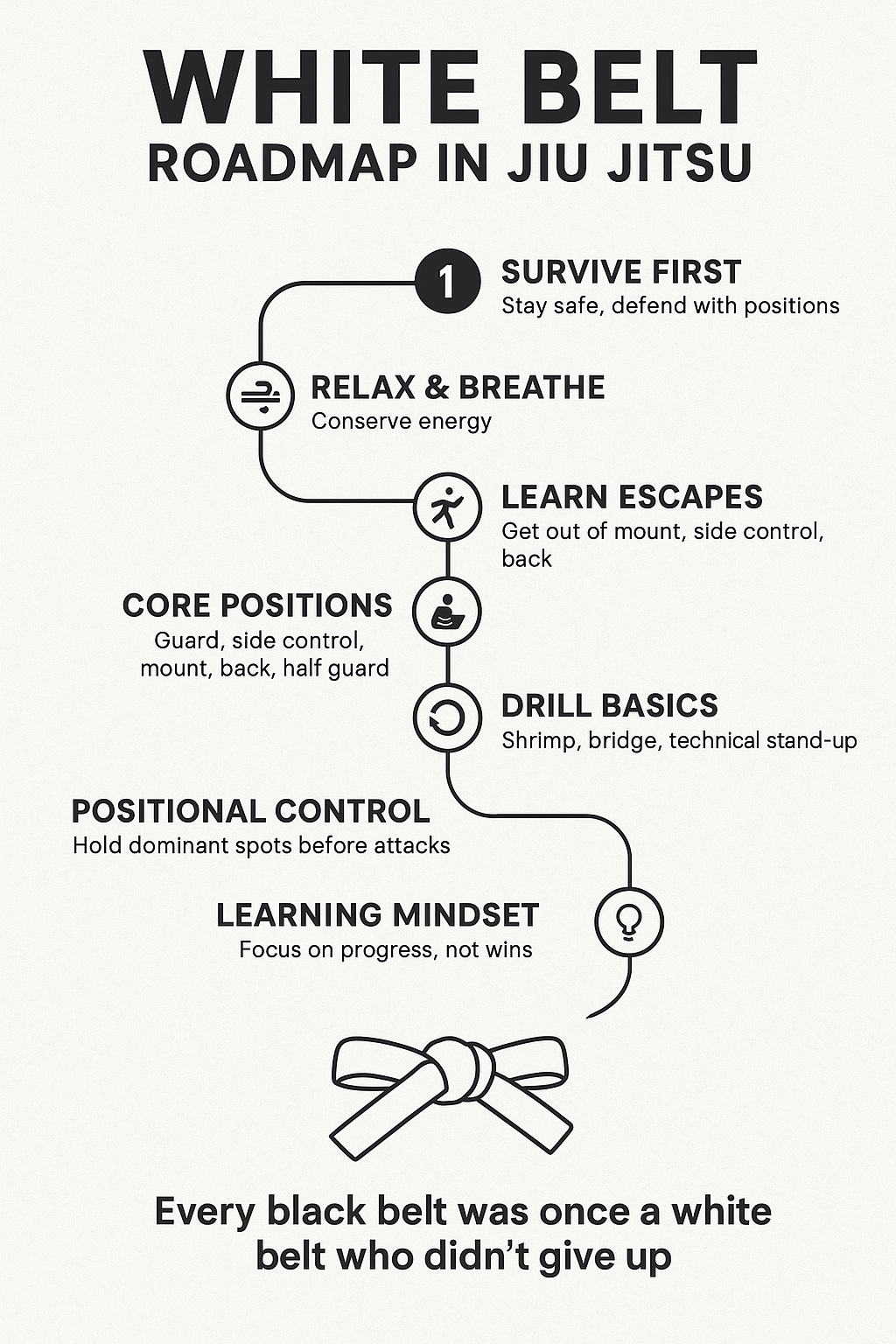
What White Belts Should Focus On in Jiu Jitsu
Starting Brazilian Jiu Jitsu is exciting—but it can also feel overwhelming. There are countless techniques, [...]