Tips to Avoid Injury in BJJ and Speed Up Recovery After Hard Training
Brazilian Jiu-Jitsu (BJJ) is one of the most rewarding martial arts you can practice — it builds strength, confidence, problem-solving skills, and a sense of community. But it’s also a full-contact sport, and with that comes the occasional bump, bruise, or strain.
Learning how to avoid injuries and recover quickly after hard sessions is a key part of training longevity. Here’s how to keep your body healthy and on the mats for years to come.
1. Warm Up with Purpose
Most people rush through warm-ups or see them as something to “get out of the way.” But a good warm-up is your first line of defense against injury.
Spend at least 10–15 minutes raising your heart rate, loosening your joints, and activating the muscles you’ll use in training. Think:
- Hip escapes and bridges
- Shoulder rolls and neck mobility drills
- Light jogging or jump rope
- Controlled positional drills (like passing to side control at low intensity)
Pro tip: Focus on movements that mimic what you’ll actually do during class. Warm-ups should prepare, not exhaust you.
2. Tap Early and Tap Often
Ego is the fastest path to injury in BJJ. Everyone gets caught — it’s part of learning.
If a submission is tight or your defense is failing, tap early. Ligaments and joints don’t heal as easily as muscles, and one stubborn moment can cost you months off the mat.
The best grapplers in the world have all tapped countless times; it’s how they learned.
3. Listen to Your Body
Small aches and pains are your body’s warning signs. Ignoring them can turn minor tweaks into serious injuries.
If your shoulder feels sore or your knee clicks every time you roll, take it seriously.
Sometimes all you need is a lighter training day or a break from certain positions until things calm down. Being disciplined enough to rest when needed is a sign of maturity as a grappler.
4. Prioritize Technique Over Strength
Muscling out of bad spots or using explosive power might save you in the short term, but it puts your joints at risk.
Train to move efficiently. Focus on proper frames, leverage, and timing — the principles that make BJJ effective regardless of size or strength.
A relaxed, technical player not only performs better but stays healthier long-term.
5. Recovery Starts After Class
The time right after training is crucial for recovery.
Here’s a solid post-training routine:
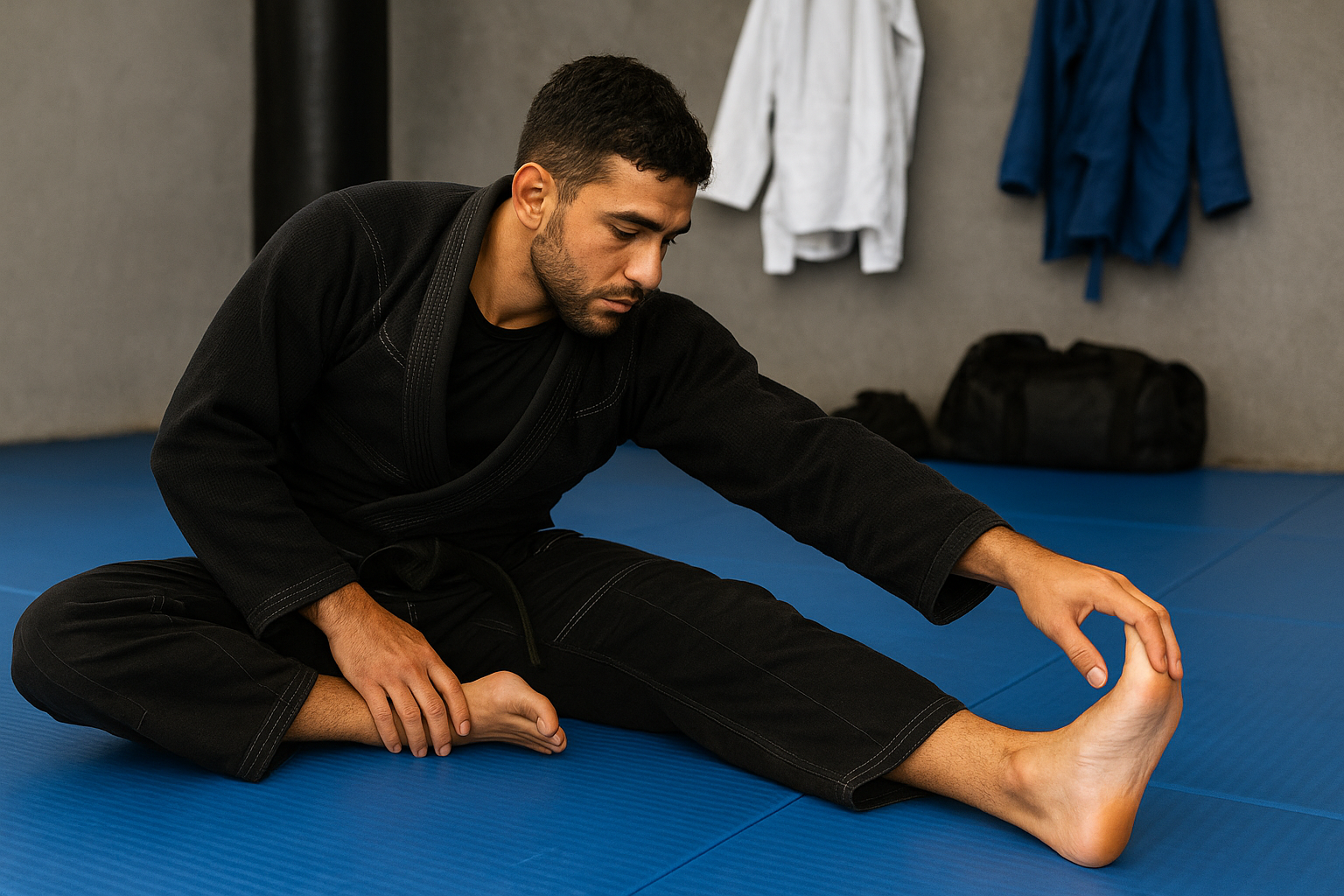
- Cool down: Light stretching or flow rolling to bring your heart rate down.
- Hydrate: Replace fluids lost during class. Add electrolytes if you sweat a lot.
- Fuel: Eat protein and carbohydrates within an hour to aid muscle repair.
- Shower: Not just for hygiene — it helps your muscles relax and prevents skin infections.
6. Use Mobility and Strength Work to Protect Your Joints
Strength training doesn’t just make you stronger — it makes you more resilient.
Prioritize exercises that build stability in the shoulders, hips, and knees:
- Turkish get-ups
- Deadlifts and hip hinges
- Pull-ups and rows
- Controlled rotational core work
And don’t skip mobility. A flexible, strong body absorbs force better and moves more fluidly on the mats.
7. Sleep: The Most Underrated Recovery Tool
Sleep is when your body actually repairs itself. No supplement or recovery gadget replaces good sleep.
Aim for 7–9 hours each night, and if you train hard multiple days in a row, consider short naps to boost recovery.
You’ll notice better reaction time, sharper technique retention, and fewer nagging injuries when you’re well-rested.
8. Manage Soreness with Smart Recovery Techniques
After an intense session, use tools and habits that support your body’s recovery:
- Foam roll tight areas
- Take an Epsom salt bath
- Do light movement or active recovery the next day
- Use ice or heat depending on the soreness (ice for inflammation, heat for stiffness)
And if something feels more than just sore, don’t hesitate to see a sports therapist or chiropractor who understands grappling.
9. Train with Good Partners
A safe, trustworthy training partner is worth their weight in gold.
Avoid rolling with people who spaz, crank submissions, or have something to prove every round.
The best partners are controlled, communicative, and know how to match intensity — you’ll get better and stay healthier training with them.
10. Think Long-Term
Injuries happen in BJJ — even with perfect habits. But you can drastically reduce their impact by playing the long game.
Consistency and health beat short bursts of intensity every time. Remember: your goal isn’t just to win rolls this week — it’s to still be training years from now.
Bottom Line:
BJJ is a marathon, not a sprint. Take care of your body, and it will take care of your progress. Avoiding injuries and recovering well means you can stay on the mats longer, keep improving, and enjoy the art without interruptions.
Related Post